
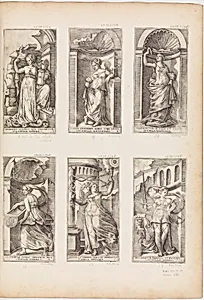
The Persian Sibyl
16th century
Medium
Engraving
Classification
Prints
Department
Drawings and Prints
Museum
Metropolitan Museum of Art, New York, NY
Credit
Harris Brisbane Dick Fund, 1927
Accession Number
27.78.2(163)
Rights
Public Domain
Tags
About this artwork
This enigmatic engraving depicts the Persian Sibyl, one of the legendary prophetesses of antiquity whose oracular wisdom fascinated Renaissance and early modern artists and scholars. Created by the Italian engraver known as the Master with the Name of Jesus, active during the sixteenth century, the print reflects sustained interest in these mythological figures who bridged pagan and Christian traditions. The sibyls, believed to have prophesied Christ's coming, appeared frequently in Renaissance ...
Art Historical Context
Step into the mystical world of Renaissance mythology with *The Persian Sibyl*, 16th-century engraving the enigmatic Italian artist known as the Master with Name of Jesus. Thisess, one of antiquity's legendary sibyls, captivated artists and scholars for her oracular wisdom, foretelling Christ's coming and blending pagan lore with Christian faith. Like Michelangelo's famed Sistine Chapel figures, she embodies the era's hunger for ancient prophecies, her Eastern origins evoking exotic wisdom from distant lands. Crafted with the sharp linear precision typical of 16th-century printmaking, the work showcases intricate costume details and the artist's signature motif—the name of Jesus woven into the design. Anonymity was common in print workshops due to guild traditions, making this master a shadowy yet influential figure whose engravings spread religious and allegorical images to educated collectors, books, and artists' studios. Housed in the Metropolitan Museum of Art's Drawings and Prints department, this impression—acquired via the Harris Brisbane Dick Fund in 1927—preserves a snapshot of Renaissance curiosity and technical virtuosity, inviting us to ponder the timeless allure of female seers.