
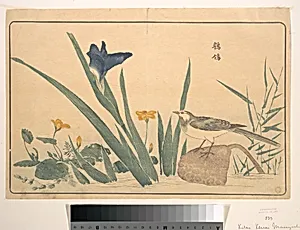
The Pied Wagtail
1789
Medium
Woodblock print; ink and color on paper
Dimensions
10 x 14 7/8 in. (25.4 x 37.8 cm)
Classification
Prints
Culture & Period
Japan · Edo period (1615–1868)
Department
Asian Art
Museum
Metropolitan Museum of Art, New York, NY
Credit
Rogers Fund, 1918
Accession Number
JP533
Rights
Public Domain
Tags
Art Historical Context
**The Pied Wagtail**, created by Japanese artist Kuwagata Keis in 1789, the delicate charm of nature through a vibrant woodblock print in ink and color on paper. 10 x 14 7/8 inches, this intimate work from Japan's Edo period (16151868) features a wagtail—a small, lively bird known for its distinctive black-and-white plumage and bobbing tail—amidst blooming flowers and lush leaves. The tags highlight these motifs, evoking the seasonal beauty central to Japanese aesthetics. Woodblock printing, a hallmark of Edo-era art, allowed for mass production of affordable, colorful images that brought art to everyday people. Keisai's precise technique showcases layered colors and fine lines, achieved through a collaborative process of carving, inking, and printing on mulberry paper. This medium democratized visual culture, flourishing alongside ukiyo-e traditions of depicting the "floating world." Housed in the Metropolitan Museum of Art's Asian Art Department (Rogers Fund, 1918), **The Pied Wagtail** reflects Edo Japan's deep reverence for flora and fauna, symbolizing harmony with nature. Visitors will appreciate its timeless elegance, inviting a moment of quiet wonder in our virtual gallery.