
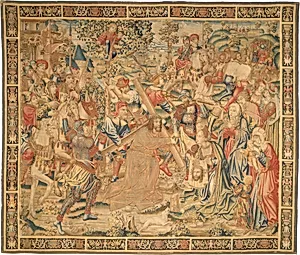
The Procession to Calvary
1530/1550
Medium
tapestry: undyed wool warp; dyed wool, silk, and silver-wrapped silk weft
Dimensions
overall: 310.5 x 363.9 cm (122 1/4 x 143 1/4 in.)
Classification
Decorative Art
Department
CSD
Museum
National Gallery of Art, Washington, D.C.
Credit
Gift of Mrs. Rudolf J. Heinemann
Accession Number
1982.74.1
Rights
Public Domain
Art Historical Context
This striking tapestry, created in Flanders between 1530 and 1550, captures the dramatic moment of Christ’s procession to Calvary. Produced during the height of the Northern Renaissance, such works were often commissioned for churches or noble households, where they served both as devotional aids and displays of wealth. The unknown Flemish weavers drew on a rich tradition of religious storytelling, using the large scale—over ten feet wide—to immerse viewers in the biblical narrative. The medium itself highlights the extraordinary craftsmanship of the period. Woven with undyed wool warp and a weft of dyed wool, silk, and silver-wrapped silk threads, the tapestry would have shimmered subtly in candlelight, adding a luminous quality to the scene. These expensive materials and meticulous techniques made tapestries among the most prized decorative arts of the sixteenth century, often more valuable than paintings. Today, this piece offers visitors a vivid glimpse into how art once brought sacred stories to life in public and private spaces, blending spiritual meaning with technical brilliance.