
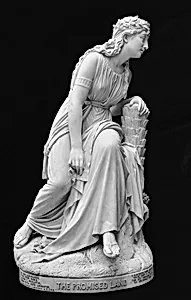
The Promised Land
1873–74; carved 1874
Medium
Marble
Dimensions
62 1/2 x 34 x 34 in. (158.8 x 86.4 x 86.4 cm)
Classification
Sculpture
Culture
American
Department
The American Wing
Museum
Metropolitan Museum of Art, New York, NY
Credit
Gift of Dr. J. Ackerman Coles, 1897
Accession Number
97.11
Rights
Public Domain
Tags
Art Historical Context
In the grand tradition of 19th-century American sculpture Franklin Simmons' *The Promised Land*modeled 1873–74; carved 1874) as a majestic marble allegory. Towering at over five feet tall (62 1/2 x 34 x 34 in.), this work from the Metropolitan Museum of Art's American Wing captures the era's neoclassical ideals, where marble's luminous purity evoked classical antiquity while symbolizing American aspirations. Gifted to the Museum in 1897 by Dr. J. Ackerman Coles, reflects the post-Civil War optimism for renewal and divine promise. The sculpture personifies "The Promised Land" through a serene female figure, embodying themes of hope, abundance, and spiritual fulfillment—common in allegorical art of the time. Simmons, an American expatriate sculptor, masterfully carved the marble to highlight fluid drapery and idealized anatomy, techniques that demanded years of chiseling for such lifelike translucency and depth. Its monumental scale invites viewers to contemplate the biblical "land of milk and honey" as a metaphor for national destiny. Displayed in The American Wing, this piece underscores marble's prestige in Gilded Age sculpture, bridging European classicism with American identity. A testament to Simmons' skill, it remains a poignant reminder of art's power to inspire amid historical upheaval.