
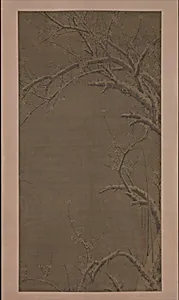
明 徐敬 嵗寒清白圖 軸|The Pure Whiteness of Winter
dated 1441
Medium
Hanging scroll; ink on silk
Dimensions
Image: 58 7/8 x 30 in. (149.5 x 76.2 cm) Overall with mounting: 107 3/4 x 37 1/4 in. (273.7 x 94.6 cm) Overall with knobs: 107 3/4 x 41 1/4 in. (273.7 x 104.8 cm)
Classification
Paintings
Culture & Period
China · Ming dynasty (1368–1644)
Department
Asian Art
Museum
Metropolitan Museum of Art, New York, NY
Credit
Ex coll.: C. C. Wang Family, Edward Elliott Family Collection, Purchase, The Dillon Fund Gift, 1982
Accession Number
1982.1.5
Rights
Public Domain
Tags
Art Historical Context
In the serene elegance of Ming dynasty art, Xu Jing's *The Pure Whiteness of Winter* (dated 1441) captures the stark beauty of a wintry landscape. This hanging scroll, rendered in delicate ink on silk, measures nearly five feet in height, designed for intimate contemplation when un. As a quintessential Chinese format, the hanging scroll allowed scholars and collectors to savor its imagery seasonally, evoking introspection amid the cold. The composition centers on resilient trees blanketed in snow, embodying the title's theme of "pure whiteness" amid the "cold of years" (嵗寒清白). In Ming China (1368–1644), such motifs symbolized moral integrity and endurance—qualities prized by the literati class—drawing from classical poetry and philosophy. Xu Jing's masterful ink washes likely employ subtle techniques like "flying white" for texture, highlighting silk's luminous sheen and the season's crystalline purity. Housed in the Metropolitan Museum of Art's Asian Art collection, this work reflects the dynasty's revival of Song and Yuan traditions, blending technical virtuosity with philosophical depth. Visitors are invited to imagine unrolling it in a scholar's studio, where winter's hush whispers timeless virtues.