
The Resurrection
Unknown Artist
dated 1375
Medium
Alabaster, polychromy, gilding
Dimensions
H. 16 in. (40.6 cm); W. 10 1/4 in. ( 26 cm); Wt. 12 lb. 14 oz. (5.85 kg)
Classification
Sculpture
Culture
British
Department
Arms and Armor
Museum
Metropolitan Museum of Art, New York, NY
Credit
Bashford Dean Memorial Collection, Funds from various donors, 1929
Accession Number
29.158.731
Rights
Public Domain
Tags
Art Historical Context
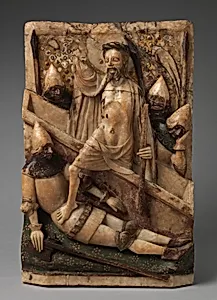
Behold *The Resurrection*, a captivating 14th-century British alabaster sculpture dated 1375, standing at 16 inches tall. Carved from the soft, translucent stone typical of England's Nottingham workshops, this unknown artist's work once glowed with vibrant polychromy—painted colors—and intricate gilding, bringing the biblical scene to vivid life. Depicting Christ rising triumphantly from the tomb, surrounded by guards in awe, it measures just 10¼ inches wide and weighs nearly 13 pounds, suggesting it was designed for intimate devotion, perhaps in a private chapel or altar. Alabaster sculptures like this flourished in late medieval England, where artisans mass-produced affordable religious images for export across Europe. The medium allowed for fine detailing—the flowing drapery of Christ's shroud, the soldiers' armor—while paint and gold leaf heightened its spiritual drama, evoking the divine light of resurrection. Though housed in The Metropolitan Museum of Art's Arms and Armor Department (thanks to the Bashford Dean Memorial Collection), its classification as sculpture underscores its artistic merit amid medieval piety. This piece captures the era's fervent Christianity, where the Resurrection symbolized hope and eternal life. Visitors, imagine its original brilliance illuminating a dimly lit medieval home— a timeless testament to faith carved in stone.