
The Resurrection
1683
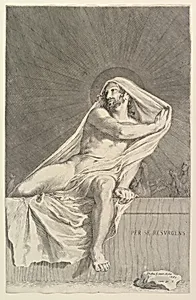
Medium
Engraving
Dimensions
sheet: 17 3/8 x 11 3/16 in. (44.2 x 28.4 cm)
Classification
Prints
Department
Drawings and Prints
Museum
Metropolitan Museum of Art, New York, NY
Credit
Harris Brisbane Dick Fund, 1957
Accession Number
41.57.4
Rights
Public Domain
Tags
Art Historical Context
Behold Claude Mellan's *The Resurrection* (1683), a masterful engraving that captures one of Christianity's most triumphant moments: Christ's rising from the tomb. Created late in the career of this renowned French engraver (1598–1688), the work exemplifies the Baroque era's dramatic religious fervor, when artists sought to inspire faith amid the Counter-Reformation. Measuring 17⅜ × 11¼ inches on its sheet, it now graces the Metropolitan Museum of Art's Drawings and Prints department, acquired through the Harris Brisbane Dick Fund in 1957. Mellan's genius shines in his engraving technique, incising intricate lines into a copper plate to produce rich, tonal depth through meticulous cross-hatching and varying line weights. This allowed for the precise rendering of ethereal light bursting from the risen Christ, surrounded by awe-struck figures—a visual hymn to divine power. Far from mere reproduction, engravings like this made grand religious scenes accessible beyond oil paintings, disseminating devotional imagery across Europe. As a print, *The Resurrection* underscores engraving's cultural role in 17th-century art, bridging elite patronage and popular piety. Visitors, marvel at how Mellan's virtuosity turns metal and ink into a timeless celebration of hope and renewal.
About the Artist
Claude Mellan · 1598–1688
Claude Mellan (1598-1688) was a French draughtsman, engraver, and painter who became one of the most innovative printmakers of the French Baroque period. Born in Abbeville to a family of coppersmiths, Mellan rose to become Peintre et Graveur Ordinaire du Roi (Painter and Engraver in Ordinary to the King), achieving recognition for his extraordinary technical mastery. Mellan's artistic significanc...