
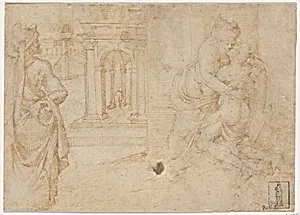
The Return of the Prodigal Son
mid-16th century
Medium
Pen and brown ink, over traces of black chalk
Dimensions
6 3/4 x 9 7/16 in. (17.1 x 24 cm)
Classification
Drawings
Culture
Italian
Department
Robert Lehman Collection
Museum
Metropolitan Museum of Art, New York, NY
Credit
Robert Lehman Collection, 1975
Accession Number
1975.1.257
Rights
Public Domain
Tags
Art Historical Context
In the tranquil galleries of The Metropolitan Museum of Art,The Return of the Proal Son* captivates visitors as a delicate mid-16th-century from the Lombardy-Veneto region of Italy. Created with pen and brown ink over traces of black chalk, intimate work measures just 6 3/4 x 9 7/16 inches, embodying the refined draughtsmanship of Renaissance Northern Italy. Part of the esteemed Robert Lehman Collection since 1975, it how drawings served as both preparatory sketches and standalone treasures, prized for their expressive lines and emotional depth. The biblical parable from Luke 15 inspires this scene, depicting the prodigal son's humble return and his father's forgiving embrace—a timeless motif of redemption and familial love. Artists in Lombardy and Veneto, influenced by Venetian masters like Titian, favored such precise ink techniques to convey movement and tenderness, with the brown ink's warm tone enhancing the narrative's humanity. Black chalk underdrawing hints at careful planning, a hallmark of the period's shift toward naturalism. This drawing invites us to ponder Renaissance Italy's cultural devotion to moral storytelling through art, bridging faith and artistry in a single, masterful sheet. A gem for drawing enthusiasts, it reveals the era's innovative blend of spontaneity and skill.