
The Seesaw
1726 to 1750
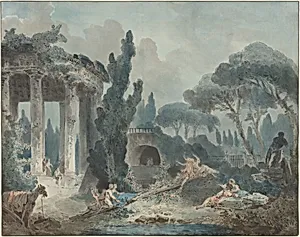
Medium
pen and black ink and watercolor on laid paper
Dimensions
overall (approximate): 37.2 x 47 cm (14 5/8 x 18 1/2 in.)
Classification
Drawing
Department
CG-E
Museum
National Gallery of Art, Washington, D.C.
Credit
Samuel H. Kress Collection
Accession Number
1963.15.28
Rights
Public Domain
Art Historical Context
**The Seesaw**, a delicate drawing in the style of the renowned French artist Hubert Robert, dates to between 1726 and 1750. Created with pen and black ink heightened with watercolor on laid paper, this work measures approximately 37.2 47 cm and exemplifies the refined draftsmanship of 18th-century France. Now housed in the National Gallery of's Samuel H. K Collection (Department CG-E), it captures a playful moment amid what evokes Robert's signature imaginary landscapes—often blending classical ruins with everyday whimsy. Hubert Robert, later dubbed "Robert des Ruines" for his evocative architectural fantasies, influenced a style marked by intricate line work and subtle watercolor washes that suggest depth and atmosphere. Here, the pen's precise strokes define forms with Rococo elegance, while watercolor adds luminosity, a technique prized for its immediacy in preparatory sketches or standalone études. Though not by Robert himself (born 1733), the attribution highlights his pervasive impact on European draftsmanship during the Ancien Régime. This charming scene of children on a seesaw offers a glimpse into 18th-century leisure, contrasting the grandeur of ruins with innocent joy—a nod to shifting cultural tastes toward picturesque informality. A treasured example of period drawing, it invites visitors to appreciate the artistry in ephemera.