
The Shadow of Poinsinet
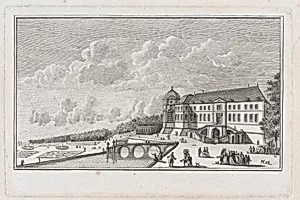
Medium
Etching
Dimensions
Sheet: 10 1/2 × 14 5/16 in. (26.6 × 36.4 cm) Plate: 5 13/16 × 8 11/16 in. (14.7 × 22 cm)
Classification
Prints
Department
Drawings and Prints
Museum
Metropolitan Museum of Art, New York, NY
Credit
The Elisha Whittelsey Collection, The Elisha Whittelsey Fund, 1953
Accession Number
53.523.68
Rights
Public Domain
Tags
Art Historical Context
Step into the enchanting world of 18th-century French printmaking *The Shadow of Poinsinet a delicate etching by Charles Michel Camp from 1773. Campion, a skilled engraver active during the Rococo era, renowned for his intricate landscapes and architectural vignettes that captured the elegance of gardens and grand estates. This print, with its modest plate size of 5 13/16 × 8 11/16 inches, invites viewers to ponder the intriguing title—likely a nod to the playwright Antoine-Alexandre-Hri Poinsinet de Sivry—evoking whimsy or satire amid lush greenery and stately buildings. Etching, Campion's chosen medium, allowed for fluid lines and subtle tonal gradations, biting acid into a copper plate to create atmospheric depth far beyond simple line work. Produced on a larger sheet (10 1/2 × 14 5/16 inches), it exemplifies the period's fascination with picturesque gardens, symbols of refined leisure in Enlightenment France. Housed in the Metropolitan Museum of Art's Drawings and Prints department, thanks to The Elisha Whittelsey Collection (acquired 1953), this work highlights the accessibility of fine art through prints, bridging elite gardens with everyday admirers. Though details of its exact scene remain evocative rather than overt, *The Shadow of Poinsinet* whispers of cultural playfulness, blending nature's beauty with human shadow in a timeless tableau.
About the Artist
Charles Michel Campion · 1732–1784
French, Marseille 1734–1784 Marseille