
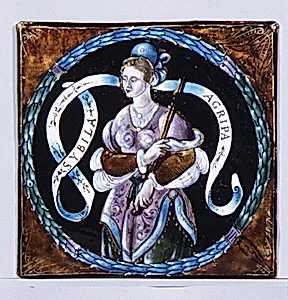
The Sibyl Aprippa
probably ca. 1535–40
Medium
Painted enamel on copper, partly gilt
Dimensions
5 1/16 x 5 1/16 in. (12.9 x 12.9 cm)
Classification
Enamels
Culture
French, Limoges
Department
European Sculpture and Decorative Arts
Museum
Metropolitan Museum of Art, New York, NY
Credit
The Friedsam Collection, Bequest of Michael Friedsam, 1931
Accession Number
32.100.252
Rights
Public Domain
Tags
Art Historical Context
Behold *The Sibyl Aprippa*, a painted enamel on copper by French artist Léonard Limosin, dating to around 1535–40. Crafted in Limoges, the epicenter of Renaissance enamel production, this small, square-format roundel (just over 5 inches across) one of the ancient sibyls—prophetesses from classical mythology revered in Christian art for foretelling the coming of Christ. Limosin, a master enameler who supplied the French royal court under Francis I, exemplifies the Limoges style: vibrant, jewel-like imagery blending Italian Renaissance influences with northern precision. The medium's brilliance lies in its technique—fine pigments in translucent enamels painted onto a copper base, fired at high temperatures, and partly gilded for luminous highlights. This allowed for intricate details, glowing colors, and durability, making Limoges enamels prized luxury objects for collectors and nobility. Unlike larger paintings, these portable panels adorned cabinets, reliquaries, or private chapels, democratizing high art in miniature form. Housed in The Metropolitan Museum of Art's European Sculpture and Decorative Arts collection, this piece from The Friedsam Collection highlights Limoges' golden age, when enamelers like Limosin elevated craft to fine art, bridging antiquity and the divine in Renaissance Europe. A testament to technical virtuosity and spiritual symbolism, it invites you to ponder the sibyl's prophetic gaze.