
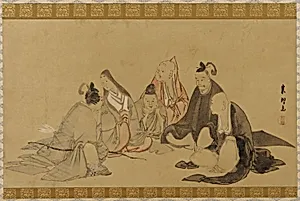
The Six Immortal Poets
late 18th-early 19th century
Classification
Painting
Department
Smithsonian Collection
Museum
Smithsonian American Art Museum
Credit
Gift of Charles Lang Freer
Accession Number
F1904.188
Rights
Public Domain
Tags
Art Historical Context
"The Six Immortal Poets" is a captivating kakemono, or hanging scroll, created by Japanese artist Hishikawa Sori during the late 18th to early 19th century. This work belongs to the Edo period (1615–1868), a time when Japanese art flourished with refined depictions of literature, nature, and daily life. As part of the Charles Lang Freer collection, now housed at the Smithsonian American Art Museum, the painting reflects the enduring appeal of classical themes in Japanese culture. The subject honors the Rokkasen, or Six Immortal Poets, a revered group from Japan's Heian era celebrated for their waka poetry. Rendered in the delicate style typical of the period, the scroll likely emphasizes graceful figures and poetic symbolism, inviting viewers to connect with centuries-old literary traditions. Its presence in the Freer gift underscores the cross-cultural appreciation for Japanese art in American collections, offering modern audiences a window into Edo-period aesthetics and the timeless role of poetry in society.