
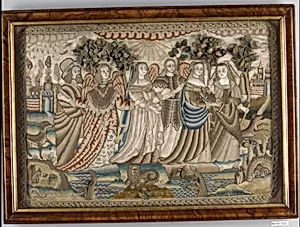
The Story of Lot
Unknown Artist
third quarter 17th century
Medium
Silk, metal, isinglass on satin, seed pearls
Dimensions
H. 13 x W. 19 inches (33.0 x 48.3 cm); Framed: H. 15 1/2 x W. 21 1/2; D. 1 1/2 inches (39.4 x 54.6; 3.8 cm)
Classification
Textiles-Embroidered
Culture
British
Department
European Sculpture and Decorative Arts
Museum
Metropolitan Museum of Art, New York, NY
Credit
Gift of Irwin Untermyer, 1964
Accession Number
64.101.1323
Rights
Public Domain
Tags
Art Historical Context
In the third quarter of the 17 century, during England's Restoration period, an unknown British artist created *The Story of Lot*, stunning embroidered panel now housed in the Metropolitan Museum of Art's European Sculpture and Decorative collection. This exquisite textile (13 x 19 inches) illustrates episodes from the biblical tale in Genesis, where Lot flees the destruction of Sodom and Gomrah with his family, guided by angels, amid a menagerie of lively animals including lions, dogs, rabbits and squirrels. These whimsical creatures, alongside human figures of men and women, reflect the era's penchant for narrative embroidery blending sacred stories with naturalistic details, often crafted by skilled amateurs like young women as both devotional and decorative art. Worked in silk and metal threads on luxurious satin, with shimmering isinglass (thin mica sheets) and delicate seed pearls, the piece showcases advanced English embroidery techniques. The opulent materials—pearls for highlights and metals for gilded effects—elevate it to a status symbol, evoking the opulence of Stuart-era interiors. Such pictorial embroideries were prized for their storytelling power and technical virtuosity, preserving moral lessons from scripture while delighting the eye with intricate stitching and vibrant motifs. A gift to the Met in 1964 from Irwin Untermyer, it offers a window into 17th-century British domestic artistry and piety.