
The Tree of Life
Unknown Artist
first half 17th century
Medium
Canvas worked with silk thread; tent, Gobelin, and couching stitches
Dimensions
H. 22 1/2 x W. 24 1/8 inches (57.2 x 61.3 cm); Framed dim.: H. 25 1/2 x W. 27 1/4 x D. 2 1/4 inches (64.8 x 69.2. x 5.7 cm)
Classification
Textiles-Embroidered
Culture
British
Department
European Sculpture and Decorative Arts
Museum
Metropolitan Museum of Art, New York, NY
Credit
Gift of Irwin Untermyer, 1964
Accession Number
64.101.1305
Rights
Public Domain
Tags
Art Historical Context
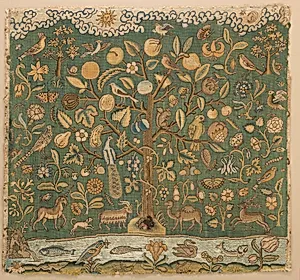
Nestled in the Metropolitan Museum of Art's European Sculpture and Decorative Arts collection, *The Tree of Life* a captivating 17th-century British textile, gifted by Irwin Untermyer in 4. Created by an unknown artist in the first of the century, this 22½ × 24⅛-inch panel bursts with life: a central tree laden with fruit teems with unicorns,ocks, camels, deer, dogs, goats, butterflies snails, squirrels, birds and even fish, evoking a paradisiacal vision of abundance and harmony. Masterfully worked on canvas with vibrant silk threads, the piece showcases advanced embroidery techniques of the era. Tent stitches provide a smooth, even texture; Gobelin stitches mimic woven tapestry for bold, flat areas; and couching secures laid threads for shimmering highlights. These methods, popular in British needlework, highlight the artisan's skill and the era's fascination with intricate domestic arts, often produced by women for home furnishings like firescreens or cushions. Symbolizing eternal life and the Garden of Eden, such Tree of Life motifs were cultural touchstones in Stuart England, blending biblical imagery with exotic fantasies. This rare survivor offers a window into 17th-century creativity, where everyday silk transformed canvas into a vibrant tapestry of wonder.