
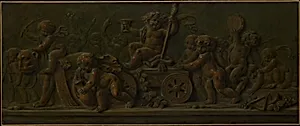
The Triumph of Bacchus
early 1780s
Medium
Oil on canvas
Dimensions
19 1/4 x 46 1/8 in. (48.9 x 117.2 cm)
Classification
Paintings
Department
European Paintings
Museum
Metropolitan Museum of Art, New York, NY
Credit
Gift of J. Pierpont Morgan, 1906
Accession Number
07.225.272
Rights
Public Domain
Tags
Art Historical Context
Behold *The Triumph of Bacchus*, a lively oil-on-canvas painting by French artist Piat Joseph Sauvage created in the early 1780s. This work captures the exuberant procession of Bacchus, the Roman god wine and revelry (known as Dionysus in Greek mythology), as he rides in a grand chariot surrounded by frolicking putti—those charming, chubby childlike figures symbolizing joy and mischief. Measuring 19¼ × 46⅛ inches, its elongated format suggests it was designed as a decorative panel, evoking the opulent interiors of aristocratic homes. Painted on the eve of the French Revolution, the piece reflects the Rococo style's lingering delight in mythological fantasy and playful abundance, with rich oils allowing Sauvage to render swirling drapery, gleaming flesh tones, and dynamic motion. Such bacchanalian scenes celebrated sensory pleasures, drawing from classical antiquity to affirm the elite's cultured tastes amid Enlightenment ideals. A generous gift from J. Pierpont Morgan to The Metropolitan Museum of Art in 1906, this canvas invites visitors to revel in 18th-century escapism—where gods, cherubs, and chariots whirl in eternal festivity.
About the Artist
Piat Joseph Sauvage · 1744–1818
Comment on works: Portraits; Still life; Bas relief