
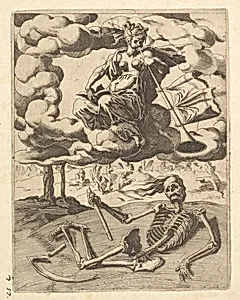
The Triumph of Fame from The Triumphs of Petrarch
ca. 1548–49
Medium
Etching
Dimensions
Plate: 8 15/16 x 6 15/16 in. (22.7 x 17.6 cm) Sheet: 13 7/16 x 10 3/8 in. (34.1 x 26.4 cm)
Classification
Prints
Department
Drawings and Prints
Museum
Metropolitan Museum of Art, New York, NY
Credit
Purchase, Mr. and Mrs. Robert J. Massar Gift, 1986
Accession Number
1986.1191.4
Rights
Public Domain
Tags
Art Historical Context
### The Triumph of Fame from *The Triumphs of Petrarch* Dirck Volckertsz Coornhert, a 16th-century Netherlandish, engraver, and philosopher active in Antwerp's vibrant print workshops, created this etching around 1548–49. It forms part of a series depicting Francesco Petrarch's *I Trionfi*, a 14th-century allegorical poem inspired by Roman triumphal processions. In this vision, Fame triumphs over Death Chastity, and Love, reflecting Renaissance humanism's fascination with classical antiquity, moral philosophy, and the eternal quest for renown. The composition buzzes with symbolic drama: skeletal figures evoke Death's grim procession, while musical instruments like trumpets herald Fame's victorious parade. Coornhert's etching technique—using acid bite intricate lines into a metal plate—allowed for fine, expressive details and tonal depth, making complex narratives accessible through affordable prints. This medium democratized high art during the Northern Renaissance, spreading Italian literary themes across Europe. At the Metropolitan Museum of Art, this work (acquired in 1986) captures a pivotal moment when prints bridged elite poetry and popular culture, reminding visitors that true glory, like Petrarch's verse, endures beyond the grave. *(198 words)*