
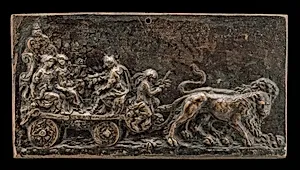
The Triumph of Justice
Medium
bronze//Dark brown patina
Dimensions
overall: 6.5 x 12.4 cm (2 9/16 x 4 7/8 in.) gross weight: 170 gr
Classification
Sculpture
Department
CSD
Museum
National Gallery of Art, Washington, D.C.
Credit
Samuel H. Kress Collection
Accession Number
1957.14.564
Rights
Public Domain
Art Historical Context
Behold *The Triumph of Justice a captivating small-scale bronze sculpture from a German or South Netherland workshop around 1600. Measuring just 6.5 x 12.4 cm and weighing 170 grams, intimate piece exemplifies the Renaissance tradition of finely cast bronzes, often created as collector's items or tabletop ornaments for elite patrons. Its dark brown patina, a natural oxidation over centuries, enhances its rich, tactile allure, evoking the era's mastery of lost-wax casting techniques that allowed for intricate details in miniature form. Crafted at the cusp of the Baroque period in Northern Europe, the work draws from allegorical themes popular in civic and moral art of the time. Justice, personified in triumphant pose, reflects the era's preoccupation with virtue prevailing over chaos—resonating amid the religious upheavals of the Reformation and the Eighty Years' War in the Low Countries. South Netherlandish foundries, like those in Antwerp, were renowned for such dynamic small bronzes, blending Mannerist elegance with emerging Baroque drama. Acquired through the Samuel H. Kress Collection and now housed in the National Gallery of Art's sculpture department, this anonymous gem invites us to ponder the enduring symbolism of justice in everyday scale. A testament to 17th-century craftsmanship, it reminds visitors of art's power to distill grand ideals into objects of quiet beauty.