
The Village Street
1790s?
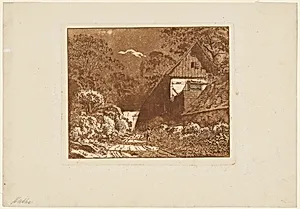
Medium
etching and aquatint printed in brown on wove paper
Dimensions
image: 14.9 × 18.5 cm (5 7/8 × 7 5/16 in.) plate: 16.3 × 20 cm (6 7/16 × 7 7/8 in.) sheet: 23.5 × 33.7 cm (9 1/4 × 13 1/4 in.)
Classification
Department
CG-E
Museum
National Gallery of Art, Washington, D.C.
Credit
The Helena E.M. Gunnarsson Fund
Accession Number
2023.66.3
Rights
Public Domain
Art Historical Context
Step into the quaint charm of *The Village Street*, an evocative print by German artist Christoph Nathe from the 1790s. Capturing a serene rural scene, this etching and aquatint on wove paper measures a modest 14.9 × 18.5 cm, inviting close inspection of its intricate details. Nathe, a master of landscape depiction, transports us to everyday village life in late 18th-century Europe where cobblestone paths and humble dwellings evoke a sense of timeless simplicity. The medium shines here: etching provides crisp, expressive lines for architectural forms and figures, while aquatint adds rich, velvety tones printed in warm brown ink. This innovative combination, popular in the Romantic era's dawn, allowed printmakers like Nathe to rival the subtleties of oil paintings, making fine art accessible through affordable reproductions. Wove paper, smooth and sturdy, ensured durability for collectors. Acquired through The Helena E.M. Gunnarsson Fund at the National Gallery of Art, this work highlights the era's fascination with nature and vernacular architecture. A delightful gem for print enthusiasts, it reminds us how Nathe's technical prowess preserved fleeting moments of rural harmony.