
The Virgin
Unknown Artist
late 16th century
Medium
Polychromed wood
Dimensions
Height: 21 1/8 in. (53.7 cm)
Classification
Sculpture
Culture
Southern Italian
Department
European Sculpture and Decorative Arts
Museum
Metropolitan Museum of Art, New York, NY
Credit
Gift of Disque D. Deane, 1959
Accession Number
59.203.1
Rights
Public Domain
Tags
Art Historical Context
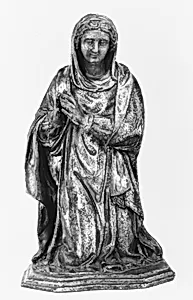
Nestled in the Metropolitan Museum of Art's European Sculpture and Decorative Arts collection, *The Virgin* is a late 16th-century polych wood sculpture from Southern Italy, standing at 21 1/8 inches tall. Crafted by an artist, this devotional figure depicts the Virgin Mary, a beloved icon in Catholic tradition, with delicate carving that brings her serene expression and flowing robes to life. The of polychromy—vibrant paints layered over wood—creates a lifelike quality, making her appear almost tangible to worshippers. In the vibrant artistic culture of Southern Italy during the late Renaissance and early Baroque period, such sculptures were essential for personal and communal devotion, especially amid the Counter-Reformation's push for emotionally resonant religious art. Wood was a practical medium in this region, allowing skilled artisans to carve intricate details like Mary's gentle hands and draped garments before applying gesso, gold leaf, and pigments for realism and splendor. This technique not only preserved the wood but also heightened the figure's spiritual immediacy. A generous gift from Disque D. Deane in 1959, *The Virgin* offers a window into Southern Italy's rich Marian piety, where processions and home altars honored the Mother of God. Though modest in scale, its enduring craftsmanship invites visitors to ponder the faith that inspired such tender artistry.