
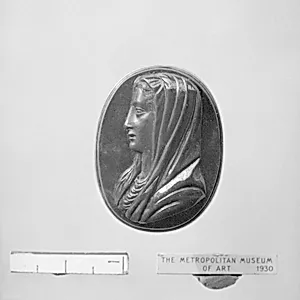
The Virgin Mary
Unknown Artist
16th–17th century
Medium
Heliotrope
Dimensions
Height: 1 5/16 in. (3.3 cm)
Classification
Lapidary Work-Gems
Culture
Italian
Department
European Sculpture and Decorative Arts
Museum
Metropolitan Museum of Art, New York, NY
Credit
The Milton Weil Collection, 1939
Accession Number
39.22.6
Rights
Public Domain
Tags
Art Historical Context
Nestled in the Metropolitan Museum of Art's European Sculpture and Decorative collection, *The Virgin Mary* is exquisite example of 16th–17th Italian lapidary work Carved from heliotrope—a striking green chalcedony flecked with red iron oxide inclusions—this tiny gem measures just 1 5/16 inches (3.3 cm) in height. Its profile depiction of the Virgin Mary captures her serene visage in intricate relief, a testament to the artist's mastery of engraving on such a hard, unyielding stone. Heliotrope, also known as bloodstone, was prized in Renaissance and Baroque Italy for its durability and symbolic resonance, often linked to protection and martyrdom in Christian devotion. Lapidary techniques involved precise cutting and polishing by hand, transforming raw stone into portable devotional objects like pendants or seals. This intimate scale suggests it was crafted for personal piety, allowing the faithful to carry the Madonna close during daily life or travel. Part of The Milton Weil Collection (1939), this gem highlights Italy's enduring tradition of glyptic art, blending sculpture's finesse with jewelry's elegance. Visitors are invited to marvel at how such minuscule details evoke profound spiritual depth, bridging art and faith across centuries.