
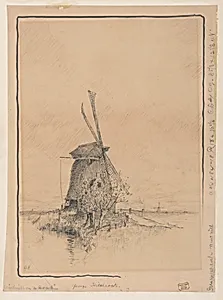
The Windmill on the Road
Classification
architecture
Department
Smithsonian Collection
Museum
Smithsonian American Art Museum
Credit
Gift of F. Elizabeth De Voy
Accession Number
1957-58-31
Rights
Public Domain
About this artwork
Research in Progress
Art Historical Context
George Hitchcock, an American painter born in 1850, captured the serene beauty of European landscapes during his expatriate years in the late 19th century. *The Windmill on the*, created in 1887 exemplifies his fascination with the Dutch countryside, where towering windmills symbolized both utilitarian architecture and poetic harmony with nature. As a member of the American Impressionist circle, Hitchcock often depicted these iconic structures against expansive skies, emphasizing atmospheric light and subtle color harmonies to evoke tranquility. Classified under architecture within the Smithsonian American Art Museum's collection—this piece was a generous gift from F. Elizabeth De Voy—the painting highlights windmills' cultural role in the Netherlands' water management and milling heritage. Though research on the work is ongoing, it reflects the era's Romantic appreciation for rural simplicity amid industrialization. Visitors will appreciate how Hitchcock's keen eye transforms a roadside scene into a timeless meditation on human ingenuity and natural splendor. (178 words)