
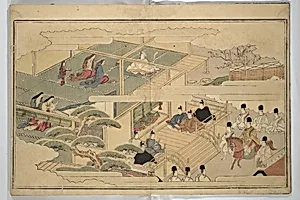
和歌夷|The Young God Ebisu (Waka ebisu) 和歌夷
Medium
Woodblock printed book; ink, color, and brass dust on paper
Dimensions
11 5/16 × 7 3/8 in. (28.7 × 18.7 cm)
Classification
Illustrated Books
Culture & Period
Japan · Edo period (1615–1868)
Department
Asian Art
Museum
Metropolitan Museum of Art, New York, NY
Credit
Purchase, Mary and James G. Wallach Foundation Gift, 2013
Accession Number
2013.853
Rights
Public Domain
Tags
Art Historical Context
Step into the vibrant world of Edo-period Japan with Kitagawa Utamaro's *The Young God EbisuWaka ebisu)*, created in 1789. This enchanting woodblock print from an illustrated book captures the youthful form of Ebisu, one of the beloved Seven Lucky Gods (Shichifukujin) in Japanese folklore. Known as the patron deity of fishermen, merchants, and prosperity, thewaka" or young Ebisu is often depicted with playful charm, embodying good fortune and abundance. Utamaro, a of ukiyo-e ("pictures of the floating world"), infuses the scene with dynamic figures—men, women, and even horses—highlighting everyday joys amid divine whimsy. Printed with ink, vivid colors, and shimmering brass dust on paper (measuring 11 5/16 × 7 3/8 in.), this work exemplifies the intricate techniques of woodblock printing. Artisans carved blocks for each color layer, applying mica-like brass for a luxurious glow that mimics metallic sheen, a nod to opulence in affordable art. During the Edo period (1615–1868), such books democratized beauty, blending mythology with urban life for a growing merchant class. Housed in the Metropolitan Museum of Art's Asian Art Department (Purchase, Mary and James G. Wallach Foundation Gift, 2013), this piece reveals Utamaro's genius for graceful lines and emotional depth, bridging sacred lore and secular delight. A delightful reminder of Japan's enduring love for lucky charms!
About the Artist
Kitagawa Utamaro 喜多川歌麿 (Japanese) · 1754 –1806
Japanese, ca. 1754–1806