
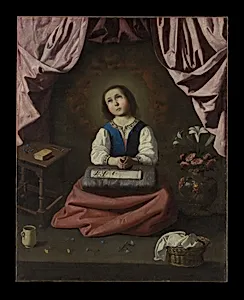
The Young Virgin
ca. 1632–33
Medium
Oil on canvas
Dimensions
46 x 37 in. (116.8 x 94 cm)
Classification
Paintings
Department
European Paintings
Museum
Metropolitan Museum of Art, New York, NY
Credit
Fletcher Fund, 1927
Accession Number
27.137
Rights
Public Domain
Tags
Art Historical Context
In the hushed glow of Francisco de Zurbarán's *The Young Virgin* (ca. 1632–33), we encounter a tender portrayal of the Virgin Mary as youthful figure, absorbed in sewing while surrounded by lilies—symbols of her purity and innocence. This oil on canvas, measuring 46 x 37 inches, captures the Spanish Baroque master's signature realism, rendering fabrics, skin, and petals with astonishing tactile precision. Acquired by the Metropolitan Museum of Art through the Fletcher Fund in 1927, it exemplifies Zurbarán's devotion to religious themes during Spain's Counter-Reformation era, when art served as a tool for spiritual contemplation. Zurbarán, often called the "Spanish Caravaggio" for his dramatic use of tenebrism—deep shadows pierced by shafts of light—elevates everyday domesticity to the divine. The young Mary's humble activity evokes her humility and foreshadows her sacred role, inviting viewers to reflect on virtue amid simplicity. This work's intimate scale and hyper-detailed still-life elements highlight oil painting's versatility in 17th-century Europe, blending portraiture with symbolism to foster personal piety. A gem of European Paintings at the Met, *The Young Virgin* reminds us how Zurbarán transformed monastic austerity into profound emotional resonance, making the holy feel profoundly human.