
Theebus
1710 - 1725
Dimensions
9.5; 7.5; 4.6
Rights
Public Domain
About this artwork
hoogte 9,5 cm x breedte 7,5 cm x diepte 4,6 cm
Art Historical Context
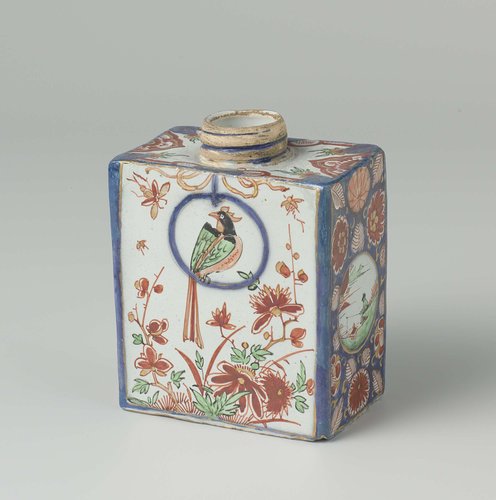
**Theebus by De Grieksche A (1710–1725)** Nestled among the treasures of early 18th-century Dutch craftsmanship, *Theebus* is a delicate object produced by De Grieksche A, a renowned pottery factory in Delft. Measuring just 9.5 cm high, 7.5 cm wide, and 4.6 cm deep, this petite piece—likely a tea caddy or canister—reflects the era's fascination with exotic imports. The name "Theebus" evokes "tea canister" in Dutch, hinting at its practical role in storing precious tea leaves, a luxury commodity surging in popularity across Europe during the Dutch Golden Age. Created between 1710 and 1725, the work embodies the innovative spirit of Delftware makers, who emulated Chinese porcelain with tin-glazed earthenware techniques. De Grieksche A, known for its distinctive factory marks, contributed to this vibrant tradition, blending functionality with subtle elegance. Though the medium remains unspecified, its compact, three-dimensional form underscores the artistry of everyday objects, transforming household items into coveted collectibles. This modest yet charming artifact offers a window into 18th-century domestic life, where tea rituals symbolized status and cultural exchange. Visitors will appreciate its intimate scale, inviting a closer look at the ingenuity behind Dutch ceramic mastery.