
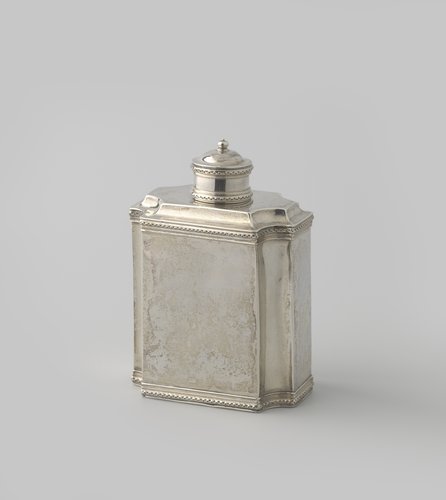
Theebus, glad en afgezet met slingerranden.
ca. 1701 - ca. 1702
Medium
silver (metal)
Dimensions
184; 5.9; 11.3; 8
Rights
Public Domain
About this artwork
height 11.3 cm x length 8 cm x width 5.9 cm x weight 184 gr
Art Historical Context
**Theebus, glad en afgezet met slinganden** by Andreas Somers, crafted around 1701–1702, is a exquisite silver tea caddy exemplifying early 18th Dutch metalwork. Measuring just 11.3 cm high, 8 cm, 5.9 cm wide, and weighing approximately 184 grams, this luxury item was designed to store precious tea leaves—a novel import from Asia that symbolized wealth and sophistication in Europe's burgeoning tea culture. Somers, a skilled silversmith, created this piece with a smooth ("glad") body elegantly edged ("afgezet") with undulating wavy borders ("slingerranden"), showcasing the era's mastery of silver hammering, chasing, and edging techniques. Silver's durability and luster made it ideal for such domestic treasures, often hallmarks of status in affluent households where tea rituals were emerging as social pastimes. This theebus offers a glimpse into the Dutch Golden Age's twilight, when global trade fueled demand for refined silverware. Its modest scale belies its cultural weight: a vessel for an exotic commodity that bridged East and West, inviting visitors to imagine intimate gatherings in candlelit parlors. (178 words)