
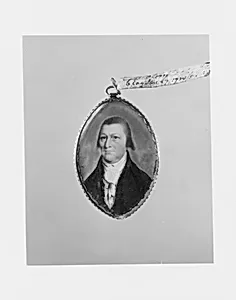
Theophylact Bache
ca. 1790
Medium
Watercolor on ivory
Dimensions
2 3/8 x 1 5/8 in. (6 cm)
Classification
Painting, miniature
Culture
American
Department
The American Wing
Museum
Metropolitan Museum of Art, New York, NY
Credit
Gift of James and Genevieve Bleecker, 2003
Accession Number
2003.64.2a, b
Rights
Public Domain
Tags
Art Historical Context
Step into the intimate world of 18th-century portrait mini with *Theophylact Bache* by John Ramage, around 1790. This delicate watercolor on ivory, measuring just 2 3/8 x 1 5/8 inches, captures the likeness of its sitter—a prominent figure in early American society—in the American Wing of The Metropolitan Museum of Art.ed by James and Genevieve Bleecker in 2003, it the refined artistry of the Federal period, when such tiny treasures were cherished as personal keepsakes, often worn in lockets or brooches. John Ramage, a skilled miniaturist active in New York and Philadelphia, mastered the challenging technique of layering translucent watercolors on polished ivory to achieve luminous skin tones and intricate details. This medium allowed for remarkable precision in a minuscule format, making portraits like this both portable emblems of status and heartfelt tokens of affection or remembrance. In post-Revolutionary America, these works reflected a growing demand for individualized likenesses amid rising mercantile and professional classes. Culturally, *Theophylact Bache* highlights the era's blend of British influence and American innovation in portraiture, bridging Enlightenment ideals of self-presentation with emerging national identity. Its survival offers a glimpse into private lives, inviting us to ponder the stories behind the gaze.
About the Artist
John Ramage · 1748–1842
Ireland ca. 1748–1802 Montreal