
Medium
Classification
Department
Smithsonian Collection
Museum
Smithsonian American Art Museum
Credit
National Portrait Gallery, Smithsonian Institution; gift of Mr. and Mrs. Paul Mellon
Accession Number
NPG.74.39.10.41
Rights
Public Domain
Tags
Art Historical Context
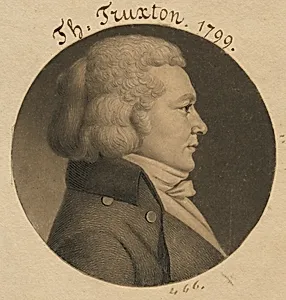
This elegant 1799 print by French-born artist Charles Balthazar Févret de Saintémin captures the profile of Thomas Truxtun a prominent American naval hero known as a commodore sheriff. Saint-Mémin, who emigrated to the United States during the French Revolution, specialized in precise profile portraits that documented the early Republic's leaders and notables. Produced through his innovative physiognotrace technique mechanical device that traced silhouettes onto paper before engraving and printing on copper plates—these small-scale prints were affordable and widely collected, making portraiture accessible beyond the elite. Truxtun's likeness reflects the era's naval fervor, just after his victories in the Quasi-War with France, including the capture of French privateers. As one of the new U.S. Navy's first commodores, he symbolized American maritime prowess during a time of fragile independence. Housed in the Smithsonian American Art Museum through a gift from Mr. and Mrs. Paul Mellon, this work from the National Portrait Gallery highlights Saint-Mémin's role in preserving the faces of America's founding generation, blending European precision with emerging national identity.