
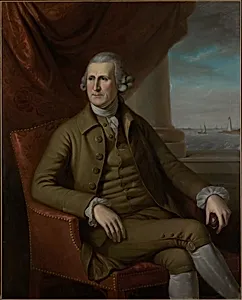
Thomas Willing
Medium
Oil on canvas
Dimensions
49 1/2 x 39 3/4 in. (125.7 x 101 cm)
Classification
Painting
Culture
American
Department
The American Wing
Museum
Metropolitan Museum of Art, New York, NY
Credit
Gift of Dr. Ernest G. Stillman, by exchange, 1966
Accession Number
66.46
Rights
Public Domain
Tags
Art Historical Context
In the hallowed halls of The Metropolitan Museum of Art's American Wing, Charles Willson Peale'sThomas Willing* (1782) stands as a luminous example of early American portraiture Painted in oil on canvas just after the Revolutionary War, this substantial work—measuring 49½ x 39¾ inches—captures the, a prominent Philadelphia merchant and financier, at a pivotal moment in the nation's founding. Peale, a polymath artist, naturalist, and patriot who painted many Founding Fathers, infused his portraits with Enlightenment ideals of rationality and civic virtue, reflecting the optimism of the young republic. Peale's masterful technique shines in the rich impasto and subtle glazing of the oil medium, which lend a lifelike depth to Willing's features, attire, and dignified pose. As a leader in the transition from colonial to federal portrait traditions, Peale moved beyond stiff English influences toward a more naturalistic American style, emphasizing character and presence. This gift to the Met in 1966 preserves a snapshot of elite society navigating post-war prosperity. Visitors will appreciate how *Thomas Willing* embodies the cultural shift toward self-made identity in America, inviting reflection on the men who shaped its economic foundations.
About the Artist
Charles Willson Peale · 1741–1827
Charles Willson Peale (1741–1827) was an American painter, museum founder, naturalist, and inventor who became the most important American portraitist of the Revolutionary era and a central figure in the cultural life of the young republic. Born in Queen Anne's County, Maryland, he initially trained as a saddler before turning to painting, studying briefly with John Singleton Copley in Boston and ...