
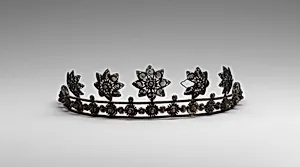
Tiara
ca. 1873
Medium
Silver filigree
Classification
Metalwork-Silver
Culture
Norwegian, Christiania
Department
European Sculpture and Decorative Arts
Museum
Metropolitan Museum of Art, New York, NY
Credit
Gift of Mrs. Harriette M. Arnold, 1906
Accession Number
06.469
Rights
Public Domain
Art Historical Context
Behold the exquisite *Tiara* crafted around 1873 by Jacob Ulrich Holfeldt Tostrup, a master silversmith from Christiania (now Oslo), Norway. This stunning piece of metalwork, now housed in the Metropolitan Museum of Art's Department of European Sculpture and Decorative Arts, exemplifies the pinnacle of 19th-century Scandinavian silver craftsmanship. Gifted to the museum in 1906 by Mrs. Harriette M. Arnold, it showcases Tostrup's skill in creating luxurious jewelry that blended functionality with opulent beauty. The tiara's medium—silver filigree—is a delicate technique where fine silver wires are meticulously twisted, looped, and soldered into intricate, lace-like patterns. This labor-intensive method, rooted in centuries-old traditions, allowed for airy, lightweight designs that evoked nature's elegance while symbolizing wealth and status. In Norway's burgeoning silver industry during the late 1800s, such pieces highlighted the nation's growing artistic identity amid industrialization. Culturally, the tiara reflects Christiania's vibrant metalwork scene, where firms like Tostrup's fused local motifs with international influences. Worn for formal occasions, it transported the wearer into a world of refined splendor, inviting us today to marvel at the patience and precision behind its shimmering filigree.