
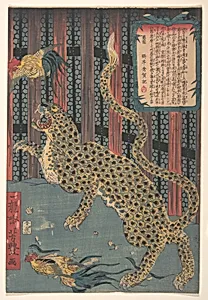
Tiger in a Cage
7th month, 1860
Medium
Woodblock print; ink and color on paper
Dimensions
Image: 14 x 9 1/2 in. (35.6 x 24.1 cm)
Classification
Prints
Culture & Period
Japan · Edo period (1615–1868)
Department
Asian Art
Museum
Metropolitan Museum of Art, New York, NY
Credit
Bequest of William S. Lieberman, 2005
Accession Number
2007.49.244
Rights
Public Domain
Tags
Art Historical Context
In the vibrant tradition of ukiyo-e woodblock printing, *Tiger in a Cage* by Ichiryūsai Yoshitoyo captures the late Edo period's fascination with the natural world. Created in the 7th month of 1860, this ink and color print on paper measures 14 x 9½ inches and exemplifies the technical mastery of Japanese printmakers. Yoshitoyo, a pupil influenced by the likes of Hiroshige II, specialized in dynamic depictions of animals and warriors, blending bold lines with subtle color gradients achieved through multiple carved woodblocks and precise hand-rubbing. The artwork's title evokes a sense of confinement and power, portraying a majestic tiger—often a symbol of ferocity and exotic allure in Japanese culture—trapped behind bars. Intriguingly, tags highlight roosters alongside tigers, suggesting a narrative interplay between these creatures, perhaps alluding to fables or the period's menageries where imported animals thrilled urban audiences in Edo (modern Tokyo). During the Edo era (1615–1868), such prints were affordable entertainments, democratizing art amid Japan's isolationist sakoku policy, which limited foreign influences until its end. Housed in the Metropolitan Museum of Art's Asian Art Department, this bequest from William S. Lieberman invites visitors to ponder humanity's complex relationship with wild beasts, rendered with Yoshitoyo's keen eye for texture—from the tiger's striped fur to the cage's stark geometry. A window into fleeting Edo life, it reminds us of art's power to cage the untamable.
About the Artist
Ichiryūsai Yoshitoyo · 1830–1866
Japanese, 1830–1866