
Tile
Unknown Artist
1620–40
Medium
Tin-glazed earthenware
Dimensions
Overall (tile): 5 1/8 × 5 1/8 × 1/2 in. (13 × 13 × 1.3 cm); Overall (whole panel): 31 3/4 × 21 1/2 in. (80.6 × 54.6 cm)
Classification
Ceramics-Pottery
Culture
Dutch
Department
European Sculpture and Decorative Arts
Museum
Metropolitan Museum of Art, New York, NY
Credit
Gift of W. R. Valentiner, 1908
Accession Number
08.196.20
Rights
Public Domain
Tags
Art Historical Context
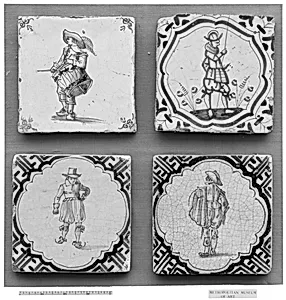
This charming Dutch tile, created between 1620 and 1640 during the height of the Dutch Golden Age, is a fine example of tin-glazedware from the Delft tradition. Measuring just 5⅛ × 5⅛ inches, it forms part of a larger panel (31¾ × 21½ inches) now housed in the Metropolitan Museum of's European Sculpture and Decor Arts collection. The scene lively depicts men with drums, capturing a moment of music-making that hints at everyday revelry or perhaps military pomp. Tin-glazing, a technique borrowed from Islamic and Italian ceramics, coated the earthenware with a white tin oxide layer, creating a smooth canvas for vibrant painted designs—often in blues reminiscent of prized Chinese porcelain. These tiles were mass-produced in workshops like those in Delft, making decorative art accessible for middle-class homes. Installed in fire surrounds, wainscoting, or kitchens, they brightened interiors while resisting soot and wear. As a gift to the Met in 1908 from W.R. Valentiner, this piece reflects the era's prosperity and cultural flair. Its anonymous artistry underscores the collaborative craft of Dutch potters, blending functionality with subtle storytelling for lasting delight.