
Tile
Unknown Artist
probably 18th–19th century
Medium
Tin-glazed earthenware
Dimensions
Overall (tile): 5 × 5 in. (12.7 × 12.7 cm); Overall (whole panel): 31 3/4 × 21 1/2 in. (80.6 × 54.6 cm)
Classification
Ceramics-Pottery
Culture
Dutch
Department
European Sculpture and Decorative Arts
Museum
Metropolitan Museum of Art, New York, NY
Credit
Gift of W. R. Valentiner, 1908
Accession Number
08.196.38
Rights
Public Domain
Art Historical Context
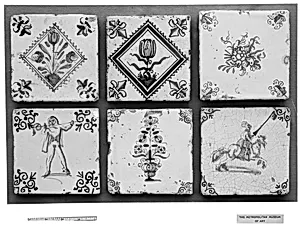
This exquisite Dutch tile panel, crafted from tin-glazed earthenware in 18th–19th century, the artistry of Holland's renowned Delftware tradition. Produced by an unknown artisan, the square tiles—each measuring 5 × 5 inches—combine to form a larger composition spanning 31¾ × 21½ inches, likely intended for interior decoration such as fire surrounds or wainscoting in prosperous Dutch homes. The tin-glaze technique, which creates a brilliant white surface ideal for vibrant painted designs, was a hallmark of Dutch ceramics, protecting the earthenware while allowing intricate motifs in blues, whites, and other colors. Historically, these tiles reflected the Netherlands' Golden Age legacy into the later centuries, blending functionality with aesthetic appeal. They adorned bourgeois interiors, warding off soot and sparks while showcasing scenes from daily, mythology, or nature—symbols of wealth and cultural refinement. This panel's survival highlights the durability of the medium and its role in everyday opulence. A generous gift to the Metropolitan Museum of Art from W.R. Valentiner in 1908, it invites us to appreciate the anonymous craftsmanship that brought artistry into ordinary spaces, bridging art and architecture in Dutch design.