
Tile
Unknown Artist
1640–60
Medium
Tin-glazed earthenware
Dimensions
5 x 5 in. (12.7 x 12.7 cm)
Classification
Ceramics-Pottery
Culture
Dutch
Department
European Sculpture and Decorative Arts
Museum
Metropolitan Museum of Art, New York, NY
Credit
Gift of W. R. Valentiner, 1908
Accession Number
08.196.62
Rights
Public Domain
Tags
Art Historical Context
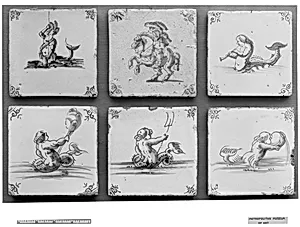
This charming 5 x 5-inch square tile, crafted in tin-glazed earthenware around 1640–60 by an unknown Dutch artist, captures the whimsical spirit of the Dutch Golden Age. Adorned with vivid scenes of men, mermaids, and horses, it exemplifies the decorative ceramics popular in prosperous Dutch households. These small-scale wonders were often used to embellish fireplaces, hearths, and walls, everyday spaces into lively tapestries of imagination. The tin-glaze technique, a hallmark of Dutch Delftware, involved coating earthenware with a tin-oxide mixture to create an opaque white surface ideal for bold painted colors that wouldn't fade under heat or smoke. This innovation made tiles affordable and mass-producible, democratizing art for the middle class during the Netherlands' era of trade and cultural flourishing. Mythical mermaids evoke maritime folklore central to Dutch seafaring identity, while human and equine figures add narrative energy, perhaps hinting at adventure or allegory. Today, housed in the Metropolitan Museum of Art's European Sculpture and Decorative Arts Department (gift of W. R. Valentiner, 1908), this tile offers a window into 17th-century domestic life—practical yet fantastical, blending utility with artistry.