
Tile
Unknown Artist
1650–80
Medium
Tin-glazed earthenware
Dimensions
5 x 5 in. (12.7 x 12.7 cm)
Classification
Ceramics-Pottery
Culture
probably Dutch, Harlingen
Department
European Sculpture and Decorative Arts
Museum
Metropolitan Museum of Art, New York, NY
Credit
Gift of W. R. Valentiner, 1908
Accession Number
08.196.73
Rights
Public Domain
Tags
Art Historical Context
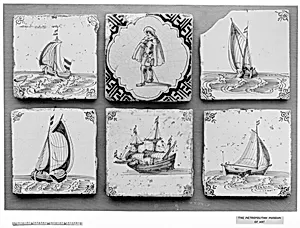
This charming 5 x 5-inch square tile, crafted from tin-glazed earthenware around 1650–80, hails from the Dutch town of Harlingen, a hub of ceramic production during the Netherlands' Golden Age. Likely depicting men and ships—a nod to the era's seafaring dominance—the tile captures everyday maritime life with vivid blue-and-white imagery typical of Dutch Delftware. The tin glaze, a technique borrowed from Italian maiolica but perfected by Dutch artisans, created a smooth, shiny surface ideal for bold designs and waterproofing, making these tiles perfect for walls, fireplaces, and interiors. Produced by an unknown artist in Harlingen workshops, such tiles were mass-manufactured yet artistically refined, blending functionality with decoration. They reflect the prosperity of the Dutch Republic, where trade and naval power fueled cultural output. Today, this piece in the Metropolitan Museum of Art's European Sculpture and Decorative Arts collection—gifted by W.R. Valentiner in 1908—offers a glimpse into 17th-century domestic splendor, reminding us how humble ceramics preserved stories of adventure and industry.