
Tile
Unknown Artist
18th century
Medium
Tin-glazed earthenware
Dimensions
5 × 5 in. (12.7 × 12.7 cm)
Classification
Ceramics-Pottery
Culture
Dutch
Department
European Sculpture and Decorative Arts
Museum
Metropolitan Museum of Art, New York, NY
Credit
Gift of W. R. Valentiner, 1908
Accession Number
08.196.98
Rights
Public Domain
Tags
Art Historical Context
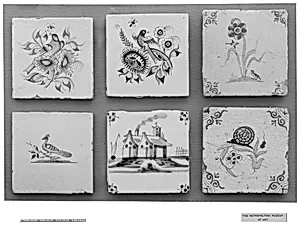
This charming 18th-century Dutch, crafted from tin-glazed earthenware, captures the whimsical spirit of everyday Dutch life through its delicate motifs of birds, flowers and boats. Measuring a modest 5 × 5 inches, it exemplifies the mass-produced yet artistic ceramics that adorned the walls of prosperous homes during the Netherlands' post-Golden Age era. The tin glaze—a technique where a lead-tin oxide mixture creates an opaque, durable white surface—allowed artisans to paint vibrant blue-and-white designs that mimicked costly Chinese porcelain, making luxury accessible to the middle class. Produced in workshops like those in Delft, these tiles served both practical and decorative purposes, forming pictorial panels that narrated scenes of nature, travel, and leisure. Birds symbolize freedom and the natural world, flowers evoke the Dutch love of horticulture, and boats nod to the nation's seafaring prowess. Though the artist remains unknown, such works highlight the collaborative craft tradition of Dutch potters, blending functionality with folk artistry. Today, this tile graces the Metropolitan Museum of Art's European Sculpture and Decorative Arts collection, a gift from W. R. Valentiner in 1908. It invites us to appreciate how humble ceramics preserved cultural stories for generations.