
Tile
Unknown Artist
1610–25
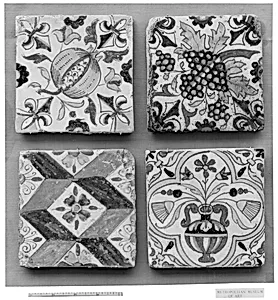
Medium
Tin-glazed earthenware
Dimensions
Overall (tile): 5 1/4 × 5 1/4 in. (13.3 × 13.3 cm); Overall (whole panel): 26 3/4 × 21 1/4 in. (67.9 × 54 cm)
Classification
Ceramics-Pottery
Culture
Dutch
Department
European Sculpture and Decorative Arts
Museum
Metropolitan Museum of Art, New York, NY
Credit
Gift of W. R. Valentiner, 1908
Accession Number
08.196.148
Rights
Public Domain
Tags
Art Historical Context
This exquisite tin-glazed earthenware tile dating from 1610–25, hails from the Dutch Golden Age, a period of remarkable prosperity and artistic innovation in the Netherlands. Produced during the height of Delft pottery production—often called Delftware—these square tiles (5¼ × 5¼ inches) were typically assembled into larger panels, as seen here in a 26¾ × 21¼-inch. Adorned with vibrant floral motifs, it exemplifies the era's love for naturalistic decoration, bringing the beauty of blooming gardens indoors. The tin-glazing technique, borrowed from Italian maiolica and perfected in Dutch workshops, involved coating earthenware with a tin-opacified glaze that created a brilliant white surface ideal for bold painted colors. Flowers, a recurring theme in Dutch tiles, symbolized abundance and the transient beauty of life, while also serving practical purposes: these durable panels lined fireplaces, kitchens, and walls to protect against soot and splashes in bustling households. Today, housed in the Metropolitan Museum of Art's European Sculpture and Decorative Arts Department (gift of W.R. Valentiner, 1908), this anonymous masterpiece offers a glimpse into 17th-century domestic elegance. Its vivid blues, greens, and whites capture the ingenuity of Dutch craftsmen, blending functionality with artistry in everyday life.