
Tile
Unknown Artist
1640–60
Medium
Delftware (tin-glazed earthenware)
Dimensions
Overall (tile): 5 3/8 × 5 3/8 × 7/16 in. (13.7 × 13.7 × 1.1 cm); Overall (whole panel): 31 × 21 1/4 in. (78.7 × 54 cm)
Classification
Ceramics-Pottery
Culture
Dutch
Department
European Sculpture and Decorative Arts
Museum
Metropolitan Museum of Art, New York, NY
Credit
Fletcher Fund, 1927
Accession Number
27.199.170
Rights
Public Domain
Tags
Art Historical Context
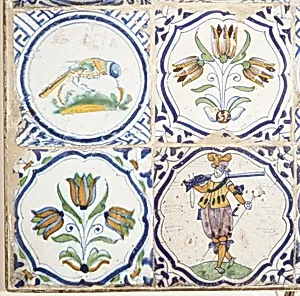
This exquisite Delftware tile panel, created by an unknown Dutch artist between 1640 1660, exemplifies the artistry of the Dutch Golden Age. Crafted from tin-glazedware—a technique that mimicked luxurious Chinese porcelain with affordable earthenware—these vibrant 5⅜-inch square tiles were assembled into a larger 31 × 21¼-inch composition. Housed in the Metropolitan Museum of Art's European Sculpture and Decorative Department (acquired via the Fletcher Fund in 1927), it showcases the period's mastery of ceramics for both function and beauty. Delftware tiles like this one adorned Dutch homes, chimneys, and interiors, serving as durable, decorative elements that brightened everyday spaces. The tin glaze provided a smooth, white canvas for bold cobalt-blue underglaze painting, fired to create lasting, glossy hues resistant to wear. Common motifs included lively scenes of birds, men, and flowers, evoking pastoral harmony and the era's fascination with nature and daily life amid Holland's prosperous trade and tulip mania. As a snapshot of 17th-century domestic culture, this panel highlights Delft's role as Europe's ceramics hub, blending technical innovation with whimsical storytelling. Visitors will appreciate how such tiles transformed ordinary walls into canvases of joy and color.