
Tile
Unknown Artist
ca. 1600
Medium
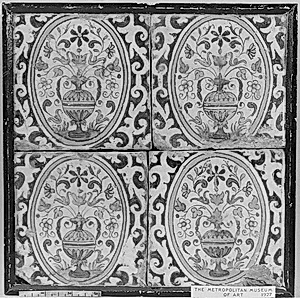
Tin-glazed earthenware
Dimensions
Overall (tile): 5 1/4 × 5 1/4 × 5/8 in. (13.3 × 13.3 × 1.6 cm); Overall (whole panel): 21 1/4 × 21 1/4 in. (54 × 54 cm)
Classification
Ceramics-Pottery
Culture
Dutch
Department
European Sculpture and Decorative Arts
Museum
Metropolitan Museum of Art, New York, NY
Credit
Fletcher Fund, 1927
Accession Number
27.199.179
Rights
Public Domain
Tags
Art Historical Context
This exquisite tin-glazedware tile, dating to around 1600, hails from the Dutch Golden Age, a time when the Netherlands flourished in trade, art, and innovation. Produced in the style of Delft ceramics, it forms part of a larger 21¼ × 21¼-inch panel, likely composed of multiple identical tiles arranged in a grid. The modest 5¼-inch square format made such pieces ideal for adorning interiors—think fire surrounds, chimneypieces, or wainscoting in prosperous homes. The medium is key to its charm: earthenware coated with tin oxide creates a glossy white surface, mimicking costly Chinese porcelain while using affordable local clay. Artisans painted vibrant floral motifs—evident from the tags—with metallic oxides before a final firing, yielding durable, colorful designs that resisted soot and wear. Flowers symbolized abundance and the era's botanical fascination, fueled by global exploration. Acquired by The Metropolitan Museum of Art in 1927 through the Fletcher Fund, this tile exemplifies Dutch ingenuity in decorative arts. It invites us to imagine 17th-century households alive with these cheerful, everyday luxuries, blending utility and beauty in everyday life.