
Tile
Unknown Artist
1640–60
Medium
Tin-glazed earthenware
Dimensions
Overall (tile): 5 1/4 × 5 1/4 × 1/2 in. (13.3 × 13.3 × 1.3 cm); Overall (whole panel): 26 1/4 × 21 in. (66.7 × 53.3 cm)
Classification
Ceramics-Pottery
Culture
Dutch
Department
European Sculpture and Decorative Arts
Museum
Metropolitan Museum of Art, New York, NY
Credit
Fletcher Fund, 1927
Accession Number
27.199.185
Rights
Public Domain
Tags
Art Historical Context
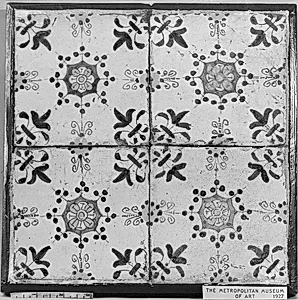
This exquisite tin-glazed earthenware tile created by an unknown Dutch artist between 1640 and 1660, hails from the Netherlands' Golden Age—a period of extraordinary prosperity and artistic innovation. Measuring just 5¼ × 5¼ inches, it forms part of a larger panel (26¼ × 21 inches) now housed in The Metropolitan Museum of Art's European Sculpture and Decorative collection, acquired through the Fletcher Fund in 7. The tile's floral motif, a hallmark of Dutch ceramics, captures the era's fascination with nature's abundance, rendered in vibrant glazes that brought interiors to life. Tin-glazing, a technique adapted from Italian maiolica and refined in Delft, involved coating earthenware with tin oxide for a smooth, white surface ideal for bold painted designs fired at high temperatures. These tiles were more than decoration; they adorned fireplaces, walls, and chimneys in prosperous homes, serving as durable, hygienic alternatives to wallpaper or paneling while showcasing artistic skill. Polychrome flowers like those here symbolized wealth, renewal, and the Dutch mastery of trade-imported motifs from distant gardens. Today, this tile offers a window into 17th-century domestic elegance, blending functionality with beauty in everyday luxury. Visitors can appreciate how such modest objects fueled Holland's ceramic industry, rivaling fine porcelain from afar.