
Tile
Unknown Artist
1620–40
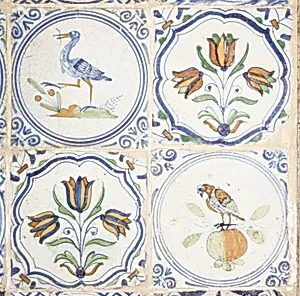
Medium
Tin-glazed earthenware
Dimensions
Overall (tile): 5 × 5 × 1/2 in. (12.7 × 12.7 × 1.3 cm); Overall (whole panel): 31 × 21 1/4 in. (78.7 × 54 cm)
Classification
Ceramics-Pottery
Culture
Dutch
Department
European Sculpture and Decorative Arts
Museum
Metropolitan Museum of Art, New York, NY
Credit
Fletcher Fund, 1927
Accession Number
27.199.350
Rights
Public Domain
Tags
Art Historical Context
This exquisite tile panel, crafted by an unknown Dutch artist between 1620 and 1640, exemplifies the artistry of the Dutch Golden Age. Composed of tin-glazed earthenware tiles—each measuring a compact 5 × 5 inches—the full panel spans an impressive 31 × 21¼ inches, designed to adorn interiors like fireplaces or walls in prosperous homes. Acquired by The Metropolitan Museum of Art through the Fletcher Fund in 1927, it hails from the European Sculpture and Decorative Arts collection, showcasing everyday luxury in 17th-century Netherlands. The medium, tin-glazed earthenware (often called Delftware), was a clever Dutch innovation mimicking Chinese porcelain. Artisans applied a tin-opacified lead glaze over fired clay, creating a smooth white surface ideal for vibrant painted designs. Before a final firing, motifs of birds amid blooming flowers were meticulously hand-painted in blue, a technique that ensured durability and rich color retention. These pastoral scenes symbolized abundance, nature's harmony, and the era's fascination with the natural world, reflecting Holland's burgeoning trade and wealth. Today, this panel invites us to appreciate how ordinary objects became canvases for beauty, transforming homes into personalized galleries. A testament to anonymous craftsmanship, it highlights the cultural role of ceramics in Dutch domestic life.