
Tile
Unknown Artist
probably 18th–19th century
Medium
Delftware (tin-glazed earthenware)
Dimensions
Overall (tile): 5 × 5 × 9/16 in. (12.7 × 12.7 × 1.4 cm); Overall (whole panel): 31 1/2 × 21 1/4 in. (80 × 54 cm)
Classification
Ceramics-Pottery
Culture
Dutch
Department
European Sculpture and Decorative Arts
Museum
Metropolitan Museum of Art, New York, NY
Credit
Fletcher Fund, 1927
Accession Number
27.199.533
Rights
Public Domain
Tags
Art Historical Context
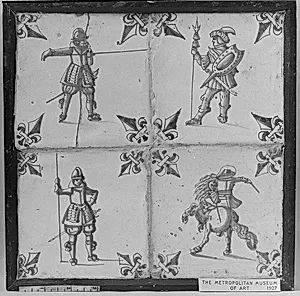
This exquisite Delftware tile panel, crafted by an unknown Dutch artist in the 18th or 19th century, showcases the vibrant tradition of tin-glazed earthenware that defined Dutch decorative arts. Comprising multiple 5-inch square tiles forming a 31½ × 21¼-inch composition, it depicts lively scenes of men and horseslikely evoking rural life, equestrian pursuits, or folklore motifs common in period tilework. Acquired through the Fletcher Fund in 7, it resides in the Metropolitan Museum of's European Sculpture and Decorative Arts collection. Delftware, produced primarily in Delft, mimicked luxury Chinese porcelain with its signature tin glaze, which created a smooth, brilliant white surface ideal for bold cobalt-blue underglaze painting fired at low temperatures. This technique allowed intricate designs to shine through everyday interiors, adorning fireplaces, kitchens, and walls in prosperous Dutch homes. Panels like this one transformed functional spaces into artistic statements, blending utility with storytelling. Its cultural significance lies in reflecting the Netherlands' Golden Age legacy into later centuries, when tile panels became cherished heirlooms symbolizing prosperity and national pride. Visitors will appreciate how this modest medium captured dynamic human-animal harmony, offering a window into everyday Dutch life.