
Tile
Unknown Artist
13th century
Medium
Stonepaste; luster-painted
Dimensions
H. 5 1/2 in. (14 cm) W. 11 in. (28 cm) D. 13/16 in. (2 cm)
Classification
Ceramics-Tiles
Department
Islamic Art
Museum
Metropolitan Museum of Art, New York, NY
Credit
The Grinnell Collection, Bequest of William Milne Grinnell, 1920
Accession Number
20.120.28
Rights
Public Domain
Tags
Art Historical Context
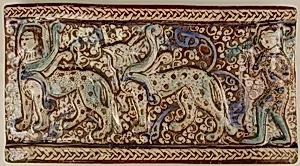
This exquisite 13th-century tile crafted from stonepaste and adorned with luster-painting, hails from the Islamic world and measures a modest 5½ by 11 inches. Its surface comes alive with vibrant depictions of mythical creatures intertwined with human figures, evoking a fantastical narrative that blends the earthly and the otherworldly. Such motifs were common in architectural decorations, where tiles like this one would have formed intricate panels gracing the walls of mosques, palaces, or madrasas. Stonepaste, a composite ceramic body made from quartz, clay, and frit, was a hallmark innovation of Islamic potters, allowing for a fine, porcelain-like whiteness ideal for detailed painting. The luster technique—applying metallic oxides over a glazed surface and firing in a reducing atmosphere—produced a shimmering, iridescent glow that mimicked precious metals, symbolizing luxury and divine light. Mastering this method, perfected in regions like Syria and Persia during the medieval period, required immense skill and was reserved for elite commissions. Now part of the Metropolitan Museum of Art's Grinnell Collection, this tile offers a window into the golden age of Islamic ceramics, where artistry flourished amid cultural exchange along the Silk Roads. Visitors can almost feel the tile's subtle depth and imagine its original splendor under flickering lamplight.