
Tile
Unknown Artist
first half 13th century
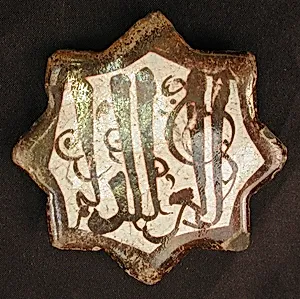
Medium
Stonepaste; overglaze and luster-painted
Classification
Ceramics-Tiles
Department
Islamic Art
Museum
Metropolitan Museum of Art, New York, NY
Credit
Rogers Fund, 1926
Accession Number
26.205
Rights
Public Domain
Art Historical Context
This exquisite tile, crafted by an unknown artist in the half of the 13 century, hails from the golden age of Islamic ceramics, likely produced in regions like Iran or Syria. Dating to a time before the Mongol invasions disrupted artistic centers, it exemplifies the sophistication of medieval Islamic art, where tiles adorned the walls of mosques, madrasas, and palaces, transforming architecture into vibrant storytelling surfaces. Made from stonepaste—a fine frit body developed by Islamic potters to imitate Chinese porcelain—the tile features overglaze and luster-painting techniques. Lusterware, with its shimmering metallic sheen achieved by applying metallic oxides and firing in a reducing atmosphere, was a prized innovation originating in 9th-century Iraq and reaching new heights in the 13th century. This method allowed for intricate designs that caught the light, evoking the opulence of royal courts and spiritual spaces. As part of the Metropolitan Museum of Art's Islamic Art collection (acquired through the Rogers Fund in 1926), this tile invites us to appreciate the anonymous mastery behind Islamic decorative arts. Its enduring luster not only highlights technical brilliance but also the cultural role of ceramics in blending beauty, faith, and everyday splendor across the medieval Islamic world.