
Tile
Unknown Artist
Medium
Earthenware
Dimensions
H. 2 in. (5.1 cm); W. 11 in. (27.9 cm); D. 5 1/2 in. (14 cm)
Classification
Ceramics
Culture & Period
China · Qin–Han dynasty (221 B.C.–A.D. 220)
Department
Asian Art
Museum
Metropolitan Museum of Art, New York, NY
Credit
Rogers Fund, 1910
Accession Number
10.202.23
Rights
Public Domain
Art Historical Context
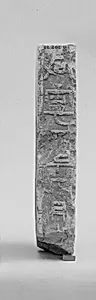
This earthenware tile, originating from China's Qin–Han dynasty ( B.C.–A.D. 220), offers a glimpse into one of the most transformative eras in Chinese history. The Qin dynasty unified the empire under Emperor Qin Shi Huang, famous for the Terracotta Army while the Han period ushered in a golden age of innovation, expansion, and cultural flourishing. Measuring a modest 2 inches high by 11 inches wide and 5½ inches deep, this rectangular tile likely served an architectural or decorative purpose, adorning tombs, walls, or palaces. Crafted from earthenware—a low-fired clay common in early Chinese ceramics—this piece highlights the period's foundational advancements in pottery. Earthenware tiles were produced using molds or hand-building techniques, often glazed or incised for durability and aesthetic appeal. Though the artist remains unknown, such objects reflect the era's skilled craftsmanship and mass production capabilities, essential for imperial projects. Housed in the Metropolitan Museum of Art's Asian Art Department (acquired via the Rogers Fund in 1910), this tile embodies the enduring legacy of Qin–Han ceramics. It connects visitors to ancient China's material culture, where everyday and elite artistry intertwined, paving the way for later porcelain mastery. A quiet survivor of over two millennia, it invites us to ponder the lives of its makers.