
Tile
Unknown Artist
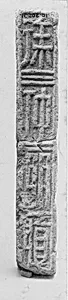
Medium
Earthenware
Dimensions
a) H. 6 1/8 in. (15.6 cm); W. 2 1/4 in. (5.7 cm); D. 2 3/8 in. (6 cm) b) H. 7 1/2 in. (19.1 cm); W. 2 1/4 in. (5.7 cm); D. 2 3/8 in. (6 cm)
Classification
Ceramics
Culture & Period
China · Qin–Han dynasty (221 B.C.–A.D. 220)
Department
Asian Art
Museum
Metropolitan Museum of Art, New York, NY
Credit
Rogers Fund, 1910
Accession Number
10.202.31
Rights
Public Domain
Art Historical Context
This pair of earthenware tiles hails from China's Qin-Han dynasty (221 B.C.–A.D. 220), a transformative era that saw the unification of the empire under the Qin and the cultural flourishing of the Han. through the Rogers Fund in 191, these modest yet evocative artifacts now reside in the Metropolitan Museum of's Asian Art department, a glimpse into early imperial craftsmanship. Crafted from earthenware—a low-fired clay common in ancient China—the tiles showcase the period's advanced ceramic techniques, likely involving molding and stamping for precise forms. Measuring about 6–7½ inches tall, with uniform widths and depths suggesting they interlocked in architectural or decorative arrangements, they exemplify the durability and versatility of earthenware in tombs, palaces, or temples. Such tiles often bore symbolic motifs, reflecting Han beliefs in immortality and harmony with nature. These unassuming objects highlight the Qin-Han's innovative spirit, bridging utilitarian function with artistic expression. Visitors can appreciate how everyday materials embodied the dynasty's grandeur, much like the famed Terracotta Army, underscoring China's enduring ceramic legacy.