
Tile
1757–61
Medium
Earthenware, transfer-printed
Dimensions
5 x 5 in. (12.7 x 12.7 cm)
Classification
Tile
Culture
British
Department
The American Wing
Museum
Metropolitan Museum of Art, New York, NY
Credit
Gift of Mrs. J. Insley Blair, 1942
Accession Number
42.197.16
Rights
Public Domain
Tags
Art Historical Context
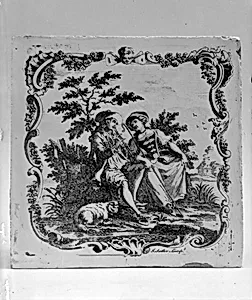
This charming earthenware tile, created by John Sadler between 1757 and 1761, showcases the innovative transfer-printing technique that transformed ceramic decoration in eighteenth-century Britain. Measuring just five inches square, the piece features a pastoral scene with men, women, and sheep, rendered in delicate detail on a modest earthenware surface. Sadler, working in Liverpool, helped pioneer this method, which allowed intricate designs to be printed from engraved plates onto pottery rather than painted by hand. The transfer-printing process marked a significant advancement in the decorative arts, enabling greater precision and affordability while bringing narrative imagery into everyday domestic settings. Tiles like this one were commonly used in fireplaces or walls, blending utility with storytelling. Its presence in the Metropolitan Museum’s American Wing highlights how British innovations in ceramics influenced colonial tastes and craftsmanship across the Atlantic during the mid-eighteenth century. Today, the tile offers visitors a glimpse into the era’s fascination with rural life and the early stirrings of industrial production in the arts.