
Tile Fragment
Unknown Artist
second half 13th century
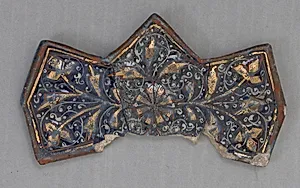
Medium
Composite body; molded, overglaze painted and gilded (lajvardina)
Dimensions
H. 4 1/8 in. (10.5 cm) W. 6 1/8 in. (15.6 cm)
Classification
Ceramics-Tiles
Department
Islamic Art
Museum
Metropolitan Museum of Art, New York, NY
Credit
Gift of Dr. and Mrs. Sidney A. Charlat, in memory of Richard Ettinghausen, 1991
Accession Number
1991.224.1
Rights
Public Domain
Art Historical Context
This exquisite tile fragment, dating to the second half of the 13 century, hails from the vibrant world of Islamic art, likely produced in Persia (modern-day Iran) during a period of artistic flourishing amid the Mongol Ilkhanid dynasty's rise. As a survivor from grand architectural ensembles—such as mosques, palaces, or madrasas—it offers a glimpse into the opulent decorative traditions of medieval Islamic culture, where tiles adorned walls to create shimmering, light-reflecting surfaces that evoked paradise gardens. Crafted in the rare lajvardina technique, the tile features a composite body that's molded for relief patterns, then coated in a luminous white glaze. Over this, artisans painted intricate designs in deep cobalt blue—mimicking the prized lapis lazuli stone—and applied gold leaf, firing the piece at high temperatures to fuse the colors permanently. This overglaze method, peaking in 13th-century Kashan workshops, represented a pinnacle of ceramic innovation, blending technical mastery with lavish aesthetics to symbolize divine splendor. Though a modest fragment (4 1/8 x 6 1/8 inches), it embodies the era's emphasis on geometry, arabesques, and gilding, inviting visitors to imagine its role in vast, jewel-like interiors. Gifted to the Metropolitan Museum of Art in 1991, it honors the legacy of scholar Richard Ettinghausen and the enduring allure of Islamic tilework.