
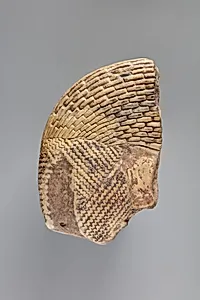
Tile fragment, part of a wig from a figure of the king
Unknown Artist
ca. 1279–1213 B.C.
Medium
Faience
Dimensions
H. 10.5 × W. 15.4 × D. 3.5 cm (4 1/8 × 6 1/16 × 1 3/8 in.)
Classification
Tile, palace of Ramesses II, headdress wig
Period
New Kingdom, Ramesside
Department
Egyptian Art
Museum
Metropolitan Museum of Art, New York, NY
Credit
Purchase, Rogers Fund, Edward S. Harkness Gift and by exchange, 1922, 1929, 1935
Accession Number
35.1.96
Rights
Public Domain
Art Historical Context
This exquisite faience tile fragment, dating to Egypt's New Kingdom (ca. 1279–1213 B.C.) during the Ramesside of Dynasty 19, captures a detailed section of a king's elaborate wig. Likely part of an inlaid decoration for a royal statue or monument, it the era's monumental art, when pharaohs like Ram II commissioned grand temples and colossal figures to embody divine power and eternal rule. Such fragments offer a glimpse into the opulent craftsmanship of ancient Thebes or nearby sites, where kings were depicted with stylized, voluminous wigs symbolizing youth, vitality, and god-like authority. Faience, a fine ceramic material glazed to mimic lapis lazuli or turquoise, was prized for its vibrant blues and greens, evoking the Nile's life-giving waters and the heavens. Artisans molded and fired these tiles with precision, firing the glaze to create a glassy, durable surface ideal for architectural inlays. At just 10.5 x 15.4 x 3.5 cm, this piece highlights the meticulous scale of Egyptian workshops, where even small elements contributed to awe-inspiring ensembles. Housed in the Metropolitan Museum of Art's Egyptian Art department, this fragment underscores the cultural reverence for pharaonic imagery, blending artistry with religious devotion. It invites us to imagine the full, shimmering figure it once adorned, a testament to an empire's artistic legacy.