
Tile Panel
Unknown Artist
late 18th–early 19th century
Medium
Stonepaste; painted and glazed
Dimensions
L. in frame: 80 11/16 in. (205 cm) L. of base: 89 1/2 in. (227.3 cm) Gr. H. 52 9/16 in. (133.5 cm) Overall Wt. in Frame: 159 lbs. (72.1kg) Individual tiles about 7 11/16 in. sq. (19.5 cm)
Classification
Ceramics-Tiles
Department
Islamic Art
Museum
Metropolitan Museum of Art, New York, NY
Credit
Gift of Dr. and Mrs. Lewis Balamuth, 1968
Accession Number
68.215.31
Rights
Public Domain
Tags
Art Historical Context
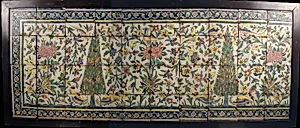
This stunning Tile Panel, created by an unknown artist in the late 18th to early 19th century exemplifies the exquisite ceramic artistry of the Islamic world. Crafted from stonepaste—a composite material of quartz, clay, and frit that allowed for thin, durable tiles with a brilliant white body—the panel features hand-painted designs under a glossy glaze. Composed of individual squares measuring about 7¾ inches each, it forms a grand architectural element, originally likely adorning the walls of a mosque, palace, or public bathhouse in regions like Persia (modern Iran) or the Ottoman Empire. The vibrant motifs of birds, flowers, and trees evoke the lush gardens of paradise, a recurring theme in Islamic art symbolizing spiritual harmony and the beauty of creation. These naturalistic patterns, painted in rich blues, greens, and golds, showcase masterful underglaze techniques that ensured colorfastness and resistance to wear. Such panels not only beautified sacred and secular spaces but also served a practical purpose, with their glazed surfaces reflecting light and repelling moisture in humid climates. Measuring over 80 inches long and weighing a hefty 159 pounds in its frame, this panel highlights the scale and ambition of Islamic tilework. A generous gift to the Metropolitan Museum of Art from Dr. and Mrs. Lewis Balamuth in 1968, it invites visitors to appreciate the timeless elegance of a craft that blended artistry, engineering, and cultural reverence.