
Timbila
Unknown Artist
19th century
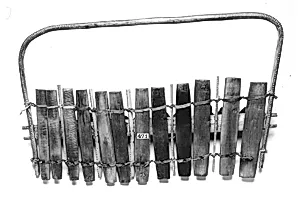
Medium
Wood, leather skin, and twine
Dimensions
85cm x 49cm x 14cm
Classification
Idiophone-Struck-bar-wood
Culture
Chopi people
Department
Musical Instruments
Museum
Metropolitan Museum of Art, New York, NY
Credit
The Crosby Brown Collection of Musical Instruments, 1889
Accession Number
89.4.471
Rights
Public Domain
Art Historical Context
Nestled in the Metropolitan Museum of Art's Crosby Brown Collection of Musical Instruments acquired in 1889, *Timbila is a striking 19th-century idiophone the Chopi people of Africa. Crafted from wood, leather skin, twine, this struck instrument measures 85 cm 49 cm x 14 cm, embodying the Chopi's masterful woodworking traditions. Its resonant wooden bars, likely tuned for melodic play, were struck to produce intricate sounds, highlighting the culture's deep integration of music into communal life. The timbila represents a pinnacle of Chopi craftsmanship, where natural materials were meticulously shaped and bound to create both functional beauty and acoustic precision. As a lamellophone relative, it underscores the Chopi's innovative approach to sound production, using vibration from wooden bars without membranes or strings. These instruments often formed the backbone of ensemble performances, fostering social bonds during ceremonies and gatherings. Today, *Timbila* invites visitors to appreciate the artistry of everyday objects from distant cultures, revealing how music bridges time and place. Its presence in the Met's collection celebrates the global diversity of human expression, preserved for generations to explore.